Atlanta’s red clay holds water like a sponge. Add steep Piedmont slopes and heavy summer storms, and hydrostatic pressure builds behind retaining walls fast. Without a clear path for water to exit, even a well-built wall starts to lean, bow, or crack. This is the most common root cause the team at Heide Contracting sees during retaining wall repair Atlanta projects across Buckhead, Midtown, Virginia-Highland, and beyond.
How Water Pressure Overwhelms a Wall
Water weighs about 62 pounds per cubic foot. Trapped water exerts force in every direction. Behind a wall, that force pushes outward and upward. In Atlanta’s clay, drainage slows, so pressure spikes during long rain events. The cycle repeats: rainfall, saturation, pressure, then soil movement. Over time, the wall loses alignment, mortar joints open, and timber ties rot.
A gravity or segmental retaining wall relies on mass and friction. A cantilever wall relies on its footing and stem. Both systems need a free-draining backfill zone with weep holes or a French drain to bleed off water. If the drain clogs or never existed, pressure increases until the wall moves. Once movement starts, it rarely self-corrects.
Early Red Flags Homeowners Should Recognize
Small changes tell a clear story. A slight tilt at the top course. Hairline cracks that widen after storms. Soil washing out through joints. Pavers near the wall sinking. Stains or damp spots that linger. In older neighborhoods like Morningside and Virginia-Highland, timber tie walls also show fungus, soft spots, and rusted spikes. In Buckhead and Chastain Park, tall walls on steep grades often bow near mid-height. These are all signs of hydrostatic pressure and drainage failure, not just age.
If the lot sits below a neighbor or near a slope above the Atlanta BeltLine or Piedmont Park, uphill runoff may add to the load. A clogged swale or misdirected downspout can push hundreds of gallons against the wall in a single storm.
Why Atlanta’s Terrain Raises the Stakes
Local soil and topography matter. Georgia red clay swells when wet and shrinks when dry, which stresses masonry joints and allows voids to form. Many Atlanta lots include fill placed decades ago. Fill settles. If builders skimped on clean, angular backfill or filter fabric, fines migrate and choke drains. In zip codes 30327 and 30305, steep lots concentrate water flow. In 30306 and 30309, older walls face modern storm volumes from expanded roofs and hardscape.
Heide Contracting factors in these local pressures. The team has rebuilt and stabilized walls near Chastain Park, the High Museum of Art, and Bobby Jones Golf Course, where slopes, runoff paths, and tree roots complicate repair plans.
What Failing Drainage Looks Like Behind the Wall
Inside the backfill zone, problems stack up. Filter fabric tears, so clay fines clog gravel. The French drain sags professional retaining wall repair in Atlanta or daylights too high. Weep holes block with silt. Downspouts discharge into the backfill by mistake. Water then saturates the soil, adds weight, and freezes occasionally, wedging cracks wider. Footings lose bearing as washout creates voids, which can spark sinkholes at the toe or behind the capstones.
In timber tie walls, trapped moisture fuels rot at the lower courses first. In masonry walls, crumbling mortar begins near the base where pressure concentrates. Segmental retaining walls (SRW) lose interlock if geogrid lengths are too short for the slope or if backfill turns muddy.
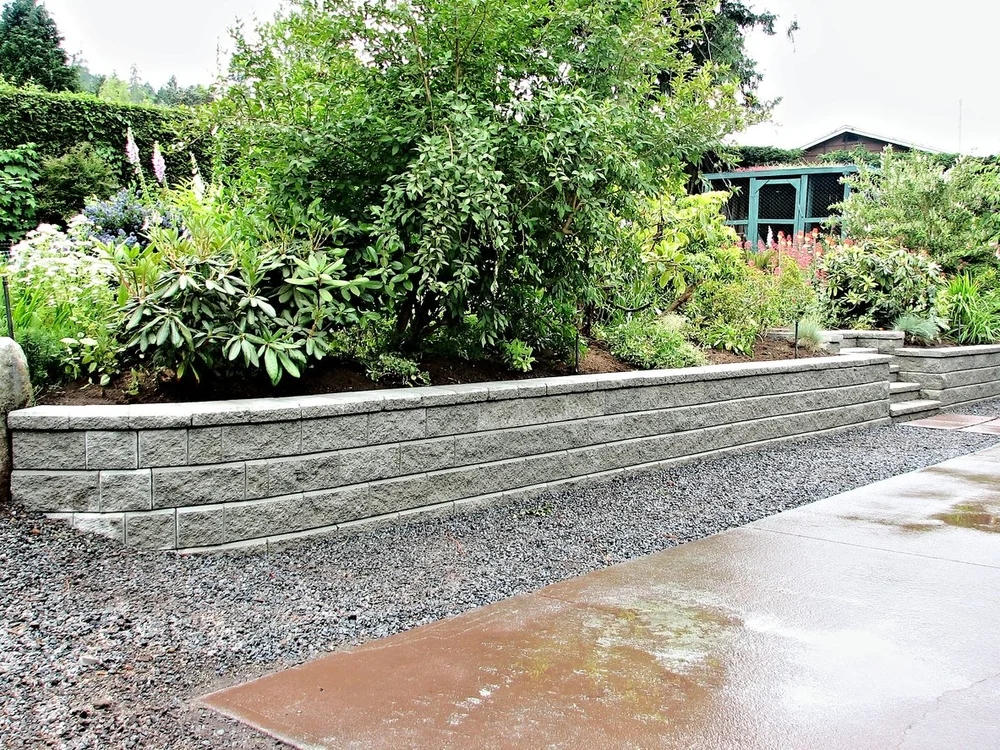
Repair Strategy: Relieve Pressure First, Then Reinforce
Drainage correction is the foundation of any lasting fix. Heide Contracting installs or rebuilds subsurface systems that move water away from the wall and reduce hydrostatic pressure. Common steps include removing saturated soil, installing clean gravel backfill, filter fabric, and a perforated pipe with a stable outlet. Weep holes are cleared or added at the correct spacing and height. Capstones are resealed to block surface inflow.
Once water is controlled, structural elements come next. The team utilizes geogrid reinforcement retaining wall contractor Atlanta to re-establish pullout resistance in SRWs and Deadman anchors to restabilize leaning timber or masonry structures. For large-scale failures or limited access sites, helical anchors tie the wall back into stable soil layers without massive excavation. Tie-backs and Simpson Strong-Tie hardware increase capacity where the wall needs it most. Footings are rebuilt if undermined, and backfill gradation is tested to avoid future clogging.
Common Wall Types and Typical Fixes
Timber tie walls often need section replacement, new Deadman anchors, and a French drain reset. Rotting lower courses should be swapped for pressure-treated members or upgraded to modular block with geogrid if loads are high. Masonry walls benefit from new weep holes, footing repair, grout injection where feasible, and tie-backs. Segmental retaining walls require geogrid placed at correct elevations and lengths, high-quality backfill, and proper compaction lifts. Gravity and cantilever walls may need footing extension, waterproofing membranes, and a reliable drainage outlet that stays clear year-round.
Heide Contracting repairs and reinforces systems from Belgard and Keystone Retaining Wall Systems and integrates components compatible with Allan Block and Redi-Rock where appropriate for performance and aesthetics.
Why Walls Fail Here: A Field View
Across Fulton County and nearby areas like Sandy Springs, Brookhaven, Decatur, Roswell, Dunwoody, Vinings, and Marietta, the pattern repeats. A homeowner notices a subtle lean after a wet spring. Months later, the lean doubles. The cause is rarely a single storm or “old age.” It is cumulative pressure with inadequate relief and soil that never truly dries. Fixes that ignore drainage—such as surface mortar patches or extra capstones—mask symptoms and raise risk. Proper retaining wall repair Atlanta needs a drainage-first approach with engineering oversight.
The Science Behind Stable Backfill
Clean, angular gravel creates a free-draining zone. Filter fabric separates gravel from native clay, preventing fines from migrating. A perforated pipe set at the base collects water and sends it to daylight at a low point. Weep holes break suction and equalize water levels. On taller walls, geogrid layers lock the reinforced soil mass into the wall face, converting pressure into a stable composite structure. This is the “what’s behind the wall” that most property owners never see, yet it is what keeps a wall straight through Atlanta’s heavy rain seasons.
Local Case Notes
A Buckhead property in 30327 had a 9-foot SRW bowing 3 inches at mid-height. The original builder used sand-clay backfill and a clogged pipe that daylit halfway up the slope. Heide Contracting removed saturated soil, added three layers of geogrid at proper embedment, rebuilt the drain with correct fall, and set new capstones. Movement stopped, and monitoring over 18 months showed no additional deflection.
In Virginia-Highland, a timber wall from the 1980s leaned due to rotted ties and missing Deadman anchors. The crew installed new anchors every 6 feet, reset the wall plane, and added a French drain connected to a solid outlet at the street. The owner reported dry garden beds and no soil loss after two major storms.
Codes, Permits, and Safety
In Atlanta, walls over 4 feet typically require an engineered plan and a permit. Heide Contracting provides a Professional Engineer (PE) consultation, then delivers drawings that meet Georgia Building Code requirements. The team is a licensed general contractor and stands behind structural repairs with a written warranty. This engineering-first approach provides a permanent solution that standard landscaping crews cannot offer.
Neighborhood Focus and Zip Codes We Serve
Heide Contracting serves properties near Piedmont Park, the Atlanta BeltLine, Swan House, and throughout Buckhead, Midtown, Ansley Park, Druid Hills, Inman Park, Morningside, and Chastain Park. The crew handles projects across 30327, 30305, 30306, 30309, 30319, and 30342, and extends service to Sandy Springs, Brookhaven, Decatur, Roswell, Dunwoody, Vinings, and Marietta. Located near the Chastain Park area, the team understands the steep lot grades that define northwest Atlanta and the drainage demands of the Piedmont ridge lines.
When a Leaning Wall Can Be Saved
Many walls can be stabilized without full demolition. If the footing is sound and movement is under a few inches, drainage correction plus tie-backs or helical anchors can stop progression. If capstones are intact and blocks are not cracked, releveling and adding geogrid may be enough. If sinkholes or footing undermining exist, partial rebuilds with new footings and proper backfill are safer. Heide Contracting evaluates each case on site and explains options with cost ranges and pros and cons.
Materials and Brands That Stand Up in Red Clay
For segmental systems, modern blocks from Belgard, Keystone, and Allan Block pair well with engineered geogrid and clean stone backfill. Where site constraints or loads are high, Redi-Rock modules offer mass and speed. Simpson Strong-Tie anchors and hardware provide tested performance for tie-back systems. Components are selected for code compliance, durability, and serviceability, not just appearance.
Quick Homeowner Checklist Before the Next Storm
- Confirm downspouts discharge away from the wall with solid pipe, not into the backfill. Look for new cracks, bulges, or gaps at capstones after rainfall. Probe timber ties for soft spots at the bottom courses. Check for soil loss or sinkholes near the toe and behind the wall. Note any standing water near the base more than 24 hours after rain.
If any item triggers concern, schedule a Structural Wall Evaluation. Small issues caught early cost far less than a rebuild.
How Heide Contracting Approaches Retaining Wall Repair in Atlanta
Every service call starts with diagnostics: measurements of lean, plumb checks, crack width mapping, and drainage tracing. The team documents soil conditions, checks for geogrid or Deadman spacing, and verifies outlet elevations. Then a PE designs a drainage plan and reinforcement layout. Crews execute with clean sequencing: excavation, temporary shoring where needed, drain install, backfill compaction in lifts, reinforcement placement, wall reset, and finish grading to shed surface water.
This methodical process mitigates hydrostatic pressure, restores alignment, and protects adjacent structures and hardscapes. It is structural engineering applied on the hillside, one layer at a time.
FAQ: Atlanta Retaining Wall Repair
Do I need a permit? Walls over 4 feet typically require an engineered plan and a permit in Atlanta. Heide Contracting handles submissions and coordinates inspections.
Can a leaning wall be saved? Often yes. With drainage correction plus tie-backs, Deadman anchors, or helical anchors, many walls stabilize without a full rebuild.
Why do walls fail in Georgia? Heavy rainfall, red clay with slow drainage, poorly filtered backfill, and missing or clogged weep holes combine to create hydrostatic pressure. Over time, that pressure wins unless the drainage works.
How long does a repair take? Small stabilization projects may take 2 to 5 days. Larger rebuilds can run 1 to 3 weeks, depending on height, access, and weather.
What about warranties? Heide Contracting provides a warranty on structural repairs and builds to Georgia code requirements.
Ready for a Code-Compliant Fix That Lasts
If the wall leans, bows, or sheds soil after storms, act now. Request a Professional Engineer (PE) consultation and a Structural Wall Evaluation. Heide Contracting delivers retaining wall repair Atlanta homeowners trust, with custom drainage design, geogrid reinforcement, Deadman anchors, helical ties where needed, and results that survive North Georgia rain. Serving 30327, 30306, and surrounding zip codes, the team is ready to stop hydrostatic pressure before it becomes a collapse. Schedule a structural assessment today.
Heide Contracting provides construction and renovation services focused on structure, space, and durability. The company handles full-home renovations, wall removal projects, and basement or crawlspace conversions that expand living areas safely. Structural work includes foundation wall repair, masonry restoration, and porch or deck reinforcement. Each project balances design and engineering to create stronger, more functional spaces. Heide Contracting delivers dependable work backed by detailed planning and clear communication from start to finish.
Heide Contracting
Phone: (470) 469-5627
Website: https://www.heidecontracting.com, Google Site
Social Media: Instagram, Facebook, LinkedIn
Map: View on Google Maps